I picked up two words during the pandemic that already existed. I had to make a third one myself.
“Rewirement” had been circulating in career writing for years before 2020, a way to describe retirement that keeps moving instead of stopping. “Eco-anxiety” already had a home in psychology, the chronic worry that settles in when you watch the planet strain under everything being done to it. I didn’t invent either word. I just finally lived the thing they were describing, and went looking for language, and found it waiting for me.
Eco-vert wasn’t waiting anywhere. I asked the internet, and so far, no one I know has used or claimed it.
Every leadership program and executive coaching session I’ve sat through eventually gets around to CliftonStrengths, or something like it, some instrument built to place you somewhere on a spectrum. Introvert, extrovert, ambivert: all of them tell you where a person’s energy comes from, inward or outward or somewhere in between. Eco-vert isn’t about energy. It’s about where attention and responsibility point. Mine points at the planet, and by extension at the people standing closest to what’s happening to it. That’s not a personality trait I discovered in myself. It’s closer to a leadership stance I’ve grown into, the way I show up in a room, what I choose to raise, what I fund my attention toward, whether the room is a grantmaking meeting, a TreeKeeper training, or a TAG board call.
You can test it with a clock, honestly. Ask me to talk about trees and five minutes starts to feel like not nearly enough, I could go long past the timer and not notice. Ask me to talk about something I got voluntold into, and that same five minutes stretches out like a lifetime. The gap between those two clocks is the tell. It’s not that I’m disciplined about trees and undisciplined about everything else. It’s that time moves differently around the things that you live for. Eco-vert, for me, is whatever I stop watching the clock for.
Learning what I won’t do has mattered as much as learning what I would. For a long time I said yes to anything that used my hands and my design brain, half-afraid that saying no to any of it would prove I didn’t belong doing this work at all. What I’ve had to learn to decline usually isn’t dramatic. It’s just work that asks me to look away from what actually needs tending so I can hit whatever the metric of the day is. The clock test answers this one too. If I have to fight my own attention the whole way through something, the answer was already there, I just wasn’t ready to hear it.
I’ve been thinking about how words get this kind of urgency. Some of them get repurposed slowly, over centuries. Retreat used to mean a military withdrawal under pressure before it ever meant a chosen, restorative one. Economy started as the management of a single household and only later scaled up to describe entire nations and the planet’s resources, the size of the “household” growing until the old word had to stretch to cover it. Nothing about those words changed on purpose. The world around them just kept getting bigger, and language caught up late.
Economy and ecology are truer cousins than people usually realize. Both come from the Greek oikos, house. Economy is oikos plus nomos, managing the house. Ecology is oikos plus logos, studying it. Philanthropy comes from somewhere else entirely, philos and anthropos, love of humanity, no house in it at all. Which might be the most honest way to describe where I sit for a living: at the seam between an institution built to love humanity and a word, ecology, built to study the home that humanity actually lives in. Those two things don’t automatically talk to each other. Someone has to hold the seam.
Most of us still don’t live like that’s true, though. We defend a much smaller radius by instinct: ourselves first, then the handful of people we love, and only after that, if there’s anything left over, the ecosystem holding all of it up. Eco-vert asks the order to run the other way. There’s no version of protecting the people you love that doesn’t eventually run through protecting the actual ground they’re standing on. There’s no plan B house to move into once this one stops working.
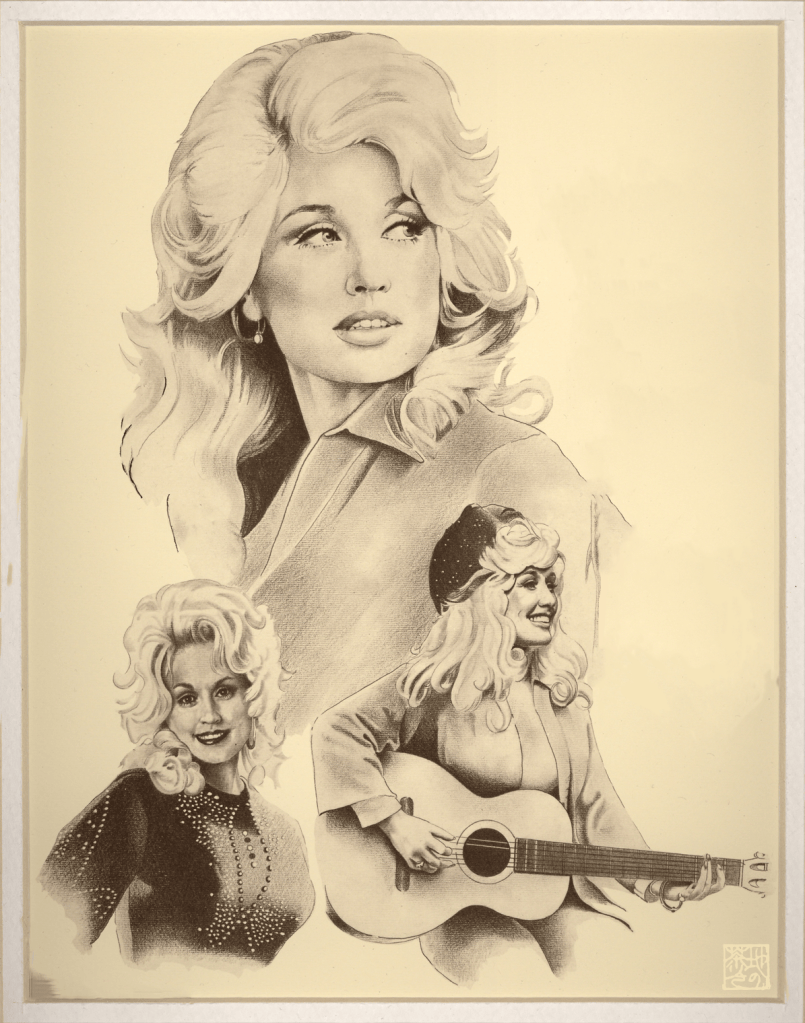
I think about Jane Goodall’s decades of patient watching, work slow enough that most people would have quit for lack of an immediate payoff. I think about Dolly Parton, who has always turned a very large kind of leverage toward a very ordinary kind of caretaking, a library card mailed to a child, a fund built the week wildfires took people’s homes. And I think about mycelium, doing maybe the quietest work on this list, an underground network moving water and nutrients, and by some accounts warning signals, between trees that never touch each other directly. None of the three would call themselves environmentalists first. All three are doing the work an eco-vert recognizes: caretaking at a scale usually reserved for one’s own household, extended to the whole shared one instead.
2020 is when I started noticing the seam. It was the year a lot of us learned, all at once, what our work and our own wellbeing were actually worth, because we’d finally been forced to stop and measure it. It was also a rude awakening about how unevenly that same stretch of time landed on people, how far apart resourced and underserved really were once you stopped assuming the distance was small. I felt that gap most sharply in the space between funders and grantees, people moving resources and people doing the work those resources are meant to reach, and noticing which side of that line I sat on. Eco-anxiety and rewirement gave me language for what the pandemic did to me personally. Eco-vert is the word for what I decided to do about the gap I saw everyone else standing in.
Robin Wall Kimmerer writes that in some Native languages, the word for plants translates to “those who take care of us”. Not resources. Not scenery. Caretakers, already, long before we’ve done anything to earn it. An eco-vert, if the word means anything, is someone trying to earn that care back.
What I live for turns out to be a short list, though it took me a long time to say it plainly: healthy ground, honest data, and kids who get to grow up around both. Everything else, the titles, the acronyms, the meetings that could’ve been an email, is scaffolding around that list, not the list itself.
I’ve been an Openlands TreeKeeper since my first planting in Douglass Park, a bur oak I still go back and visit. That’s where the eco-vert in me started, long before I had a name for it. It just took a pandemic and a few years of standing in the right rooms to notice the through-line and finally name it.
If you’ve got a word for something you lived through before anyone handed you the language for it, I’d genuinely like to hear it.

