
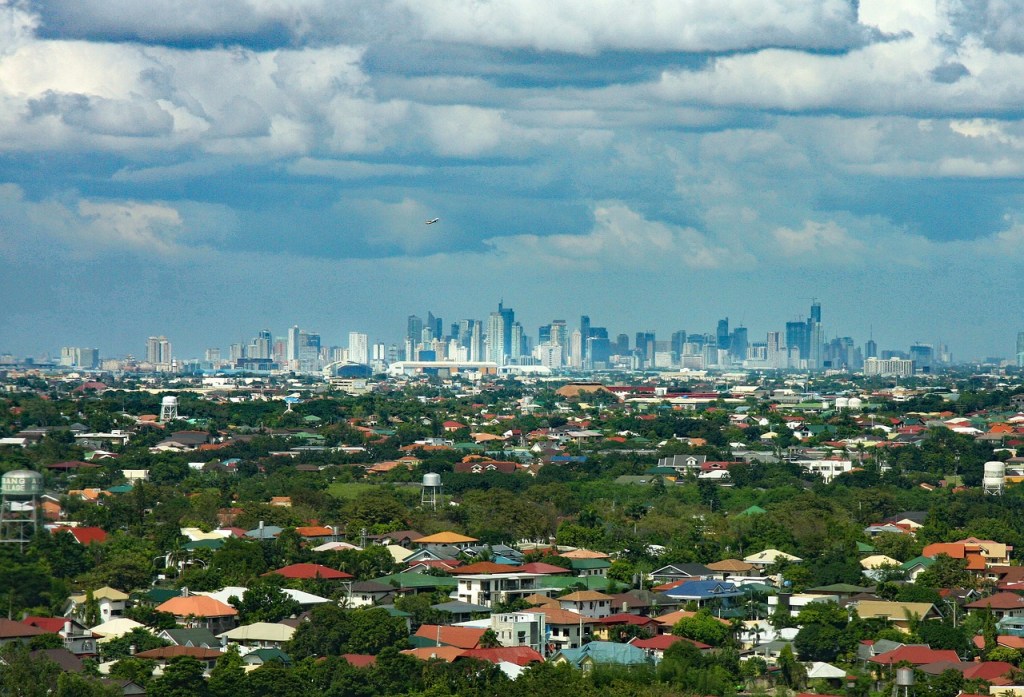
Each October is Filipino American History Month and this year’s theme is “Struggle, Resistance, Solidarity, and Resilience.” I attended high school at Seisen International School in Tokyo, where I studied the International Baccalaureate (IB) Degree Program in tandem with my school’s competitive GED. My interest in the history of the Philippines formalized during this time of my studies. My final paper was on the “History of the Philippines: Dismantling Colonization, Oppression, and the People Power Revolution”, and my extended essay, required for graduation, was on “Philippine Independence: National Artists and Musicians who were instrumental to their Resilience and Love for their Country and People.” Through my research, I discovered my ancestral ties to national artists Nicanor Abelardo and Guillermo Tolentino.
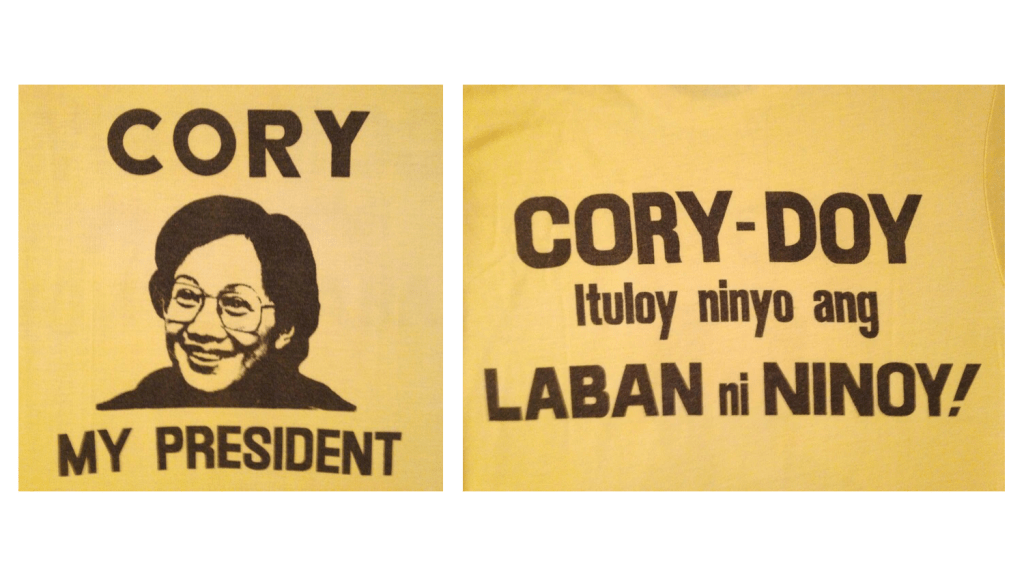
In Western newspapers, most people preferred to refer to President Cory Aquino rather than her full name, Maria Corazon “Cory” Sumulong Cojuangco-Aquino. “Cory” loved yellow because it symbolized power and hope for the people. Her loyal supporters would hold up an “L” sign with their right hands. I used to think the “L” meant “Love”, but it meant “Laban” (which my parents defined as “Fight for Love”). When I was 12 or 13, I was invited to an event at the Philippine Embassy in Tokyo, Japan. (My parents were not in politics, but they were involved with events there and were often invited to ceremonies as guests.) My mom’s first cousin was appointed Ambassador Romy Arguelles. To me, he was Tito Romy. I have a photo somewhere of me in a yellow Philippine “terno” giving President Corey Aquino a beautiful bouquet of flowers.
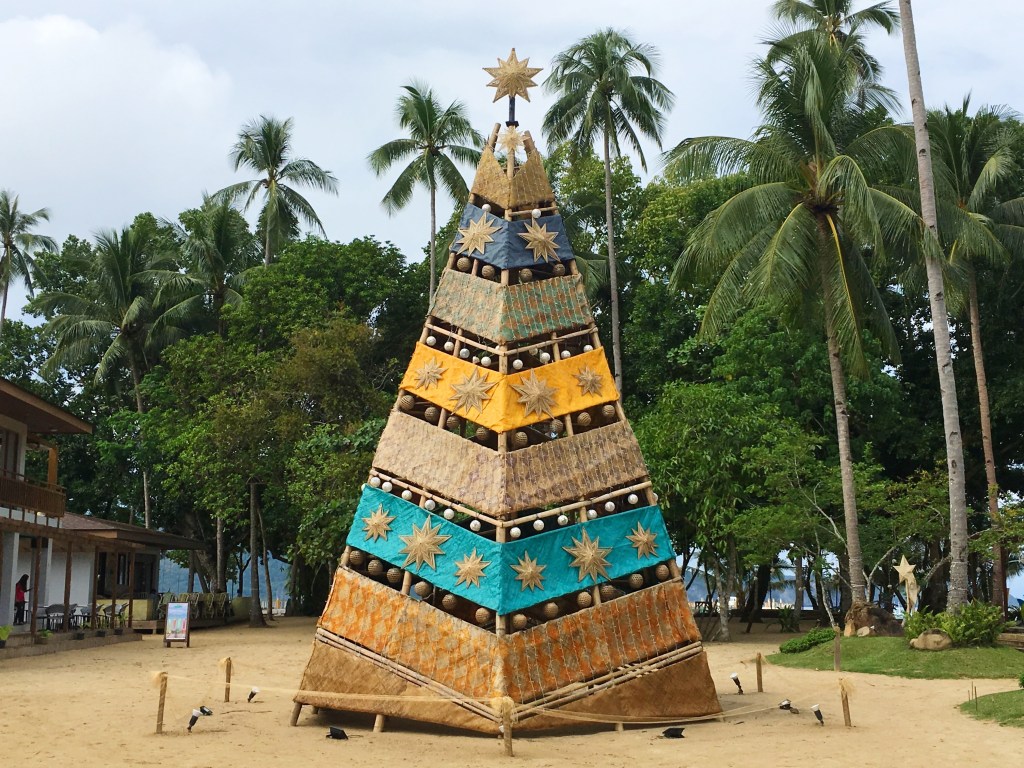
Christmas in the Philippines was focused on charity, kindness, and family. We never had presents under the Christmas tree, but we had a festive plastic Christmas tree in the Philippines and another one boxed in Tokyo during our time there. My siblings and I never went through the sadness of realizing Santa was not real, because in our family Santa was replaced by spending quality family time together. Christmas was not about receiving gifts or money, although New Years Day introduces “aguinaldo”, which is the gift of money from elders to younger kids after a “mano po” blessing. The word mano comes from the Spanish word for “hand”. The custom dates to pre-colonial times. My parents wanted us to care more about giving to those in need, and we were always taught to respect our elders, even when we don’t agree.
I watched Nurse Unseen this month. I know more than one Filipino who is a nurse in America and I’m guessing you do, too. The history of Filipino nurses in America stems from the immigration of caregivers from American military bases during the war who educated and became certified to carry their practice into the U.S. I also have uncles who served in the Navy, the Army, the Air Force, and in the Marines. What I learned from this film is that Filipino nurses stayed on the frontline of the AIDS epidemic, SARS, COVID-19, while suffering anti-Asian hate, yet they have a lot of faith and care for people. They even find ways to sing uplifting songs during difficult times to boost morale. I highly recommend this film, but it will likely make you cry both tears of loss and hope.
Filipino Americans have come a long way in the United States of America. They have gone through intergenerational visa and naturalization applications to be accepted and welcomed in service to this country. In Chicago, my great-great-grand uncle, Nicanor Santa Ana Abelardo (more commonly known as Nicanor Abelardo) or Lolo Kanor, studied at the Chicago Musical College under Wesley LaViolette while pursuing his master’s degree. During this time, Nicanor was influenced by the musical innovations of the Second Viennese School, and he was granted the LaViolette Scholarship award. Prior his move to Chicago, he composed the melody of the University of the Philippines’ official anthem, titled U.P. Naming Mahal (which means U.P. Beloved) in 1917. This song is still very popular today.
Filipino Americans have so much to celebrate all year round, and I am glad to have been able to share a small part of my family history with you. Our food is comforting and trending throughout the city of Chicago. If you want to try some Filipino-inspired eats, I recommend Uncle Mike’s Place, Sunda, Boonie’s Filipino Restaurant, Mano Modern Cafe, Kasama (featured on The Bear), Bayan Ko, Subo, Kubo, and Max’s in Albany Park’s Seafood City.
Happy Filipino American History Month!
Maraming salamat po! Thank you very much!
 TK 1713