
Today our honey locust tree in our front yard came down. It had been struggling, but I didn’t know much about trees until I took a TreeKeeper course with a non-profit organization called Openlands early this year.
Founded in 1963, Openlands protects the natural and open spaces of northeastern Illinois and the surrounding region to ensure cleaner air and water, protect natural habitats and wildlife, and help balance and enrich our lives.
As soon as I recognized it’s deteriorating health and poor positioning with electric wires, I put in 311 requests, consulted the Morton Arboretum plant clinic, called ComEd, but unfortunately despite having multiple records of tree trimming and/or removal requests, I did not get the help I needed until it was too late. We were incredibly fortunate for no casualties from the falling tree. It was probably around 72-78 years old based on the number of rings visible within it’s core trunk.
This tree came with the house when it was last purchased around 2006. It made the house feel like a home. It offered shade, security, and it had nice fall colors, too. Unfortunately, not all trees are good for our urban canopy and while it is native to Chicago, it’s never good to plant rows of honey locust trees on a parkway or in one place. Diversity is very important between tree species and planting trees in the right place is also key for its longevity. While initially this tree never showed 2-3″ spikes in the years we’ve known our tree, concerning thorns emerged during the past year or so ago. There was also signs or ‘flowers of decay’ also known as fungi growth. Healthy honey locust trees are planted in the city without the thorns, but when stressed due to disease, it can resurface its native thorns. The southside and especially underserved neighborhoods tend to have the most honey locust populations, but they are easily one of the top ten tree species in all of Chicago.
Old school Chicagoans will say Little Village is actually South Lawndale, which is a listed neighborhood under the City of Chicago Data Portal. I don’t hear people refer to the area as South Lawndale or see it on any city street sign. Over the course of the next 5 years (and hopefully more) the city is working towards a tree equity effort due to the lack of urban canopy in underserved communities. While the work sound easy, especially if money is in the budget, being able to communicate with and connect with the people that live in these neighborhoods is the biggest challenge of all.
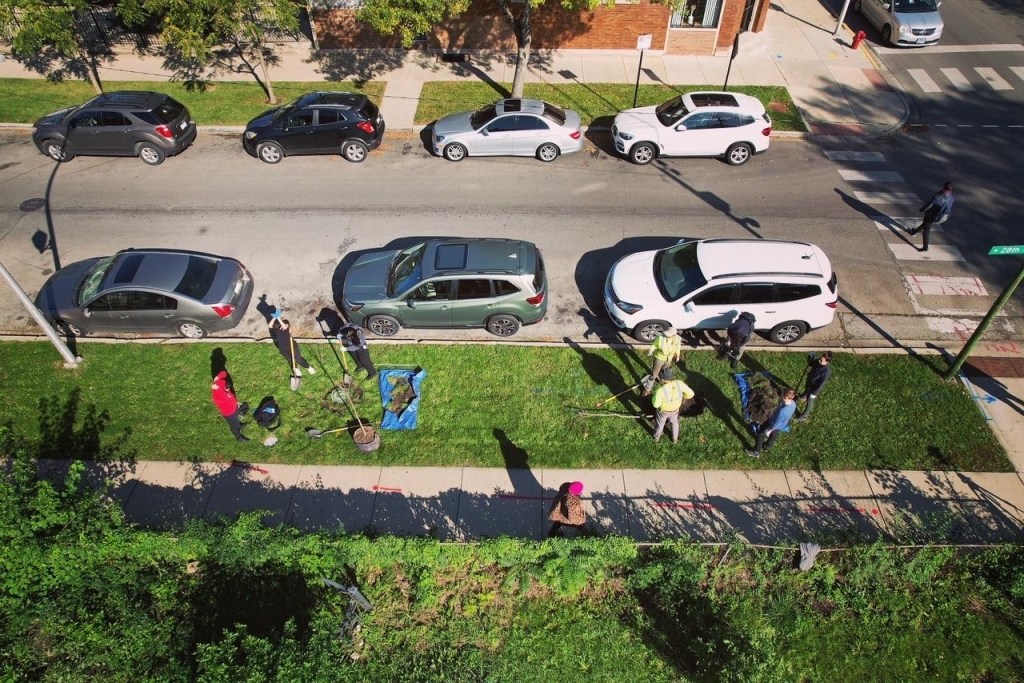
Ever since my certification as a volunteer TreeKeeper with Openlands, I’ve continued my tradition of early morning hikes at places like Morton Arboretum, walks through city green spaces, and adventures into neighboring forest trails. Tree plantings make it feel like advocating for trees is a fun activity, but losing trees on my property or in my care can really feel like a heavy loss. My front yard quickly felt like a prison with its iron fence bars framing the landscape that once was. You don’t miss it until it’s gone.
At my own pace, I am taking courses under Morton Arboretum’s Natural Conservation Areas Training (N-ACT) program and have become a member of the International Society of Arboriculture. It is my intent to bridge my skills in Data Science with efforts towards improving our urban canopy, advancing tree equity and quality of life.
 TK 1713
Leave a Reply